
Obtén una trazabilidad completa con el nuevo Historial de Cambios
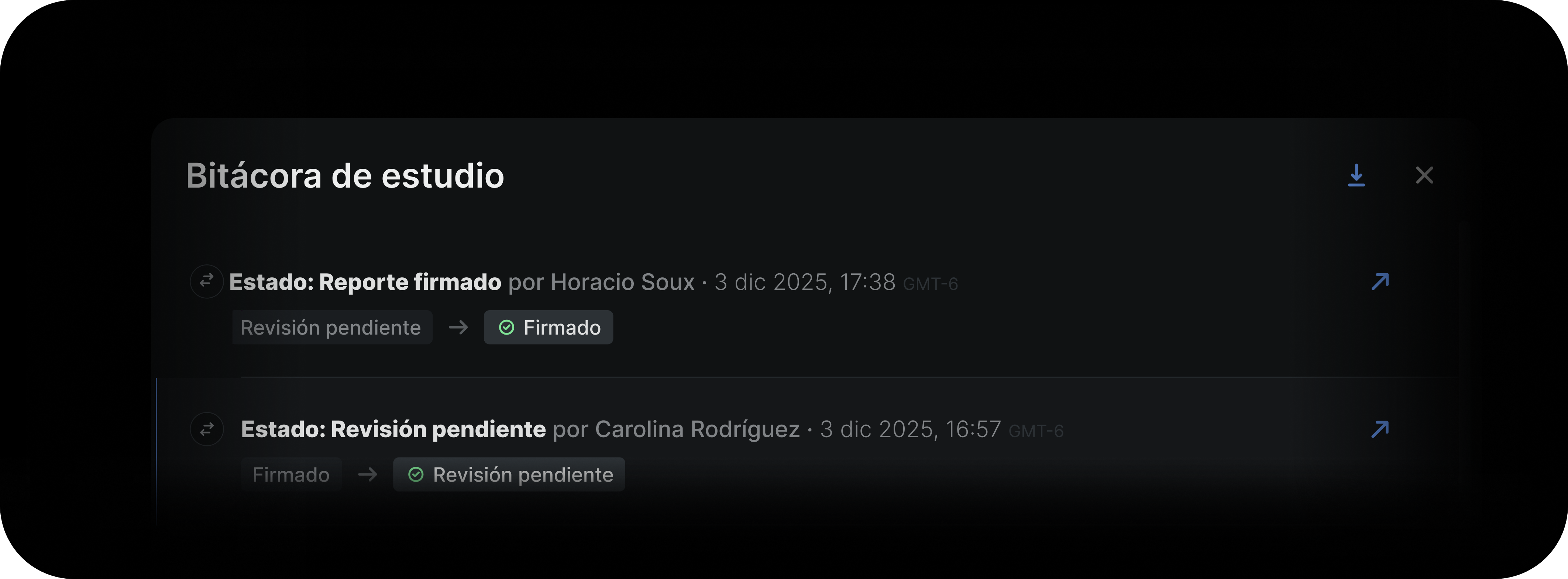
Como parte de las mejoras orientadas a proporcionar una mayor trazabilidad y control clínico, la Historial de cambios función se ha añadido al visor y al panel de estudios, permitiendo a los usuarios visualizar, de forma organizada, todos los cambios, acciones y eventos relevantes que han ocurrido en un estudio desde que ingresó al sistema.
Qué es
Es una herramienta que muestra, en un único panel, el registro cronológico de las actividades asociadas a un estudio, incluyendo movimientos, modificaciones, estados, usuarios involucrados y eventos del flujo de trabajo de informes. El historial permite a los usuarios saber qué sucedió, cuándo sucedió y quién realizó cada acción.
La información se presenta de manera estructurada según los metadatos capturados por el sistema y puede incluir eventos automáticos (del sistema) y manuales (del usuario), dependiendo de la configuración del cliente.
Para qué sirve
El historial es útil para:
- Auditar el proceso completo de un estudio, desde su recepción hasta su entrega.
- Identificar quién abrió, modificó o firmó un informe.
- Revisar cambios de estado, intentos de interpretación, reasignaciones o devoluciones.
- Resolver dudas operativas entre áreas (tecnología, soporte, radiología, médicos referentes).
- Mejorar la trazabilidad en instituciones con múltiples radiólogos, turnos o modalidades.
Cómo afecta al flujo de trabajo
Anteriormente, la trazabilidad dependía de consultas aisladas en el RIS o de registros no integrados. Con esta herramienta, la información de las acciones es directamente accesible dentro del estudio, sin necesidad de realizar búsquedas adicionales.
El usuario puede verificar de inmediato si el estudio fue movido, reasignado, corregido o reabierto, lo que permite una gestión más clara del ciclo de vida del informe. Esto reduce los tiempos de soporte, evita confusiones operativas y promueve la transparencia en el proceso clínico.
Qué cambia respecto a versiones anteriores
Antes de esta incorporación, el sistema no ofrecía un panel unificado que mostrara el detalle de los eventos y modificaciones de un estudio. La información estaba dispersa en varios módulos o no estaba disponible para el usuario final.
Con esta actualización:
- Los eventos se centralizan en un único panel.
- Se habilita la visualización cronológica con detalle del usuario y la acción realizada.
- Se mejora la auditoría clínica y administrativa de cada estudio.
Implicaciones para el usuario
La información visible en el historial depende de los permisos configurados y de las políticas del cliente.
- Algunos eventos pueden ser visibles únicamente para administradores o coordinadores.
- El nivel de detalle puede variar según cómo el RIS-PACS registre los eventos.
Los usuarios pueden apoyarse en esta herramienta para resolver discrepancias en los estados, validar flujos de trabajo y coordinarse con soporte sin necesidad de realizar consultas técnicas complejas.
Consideraciones finales
El Historial de Cambios mejora la transparencia operativa y refuerza el control sobre el ciclo de vida de los estudios en instituciones con un alto volumen de actividad o múltiples actores involucrados en el proceso de informes. Su integración directa en el visor facilita la revisión sin necesidad de cambiar de módulo y añade una capa adicional de seguridad, auditoría y orden a la gestión de estudios clínicos.